
When Blessing Becomes a Blind Spot

There’s a particular danger in life that often doesn’t appear when things are difficult. It appears when things are going well.
Daniel 4 gives us a striking example through King Nebuchadnezzar. At the height of his power, he wasn’t facing war, famine or crisis. In his own words, he was “at rest” in his house and “flourishing” in his palace.
Life was comfortable.
And that was exactly when pride crept in.
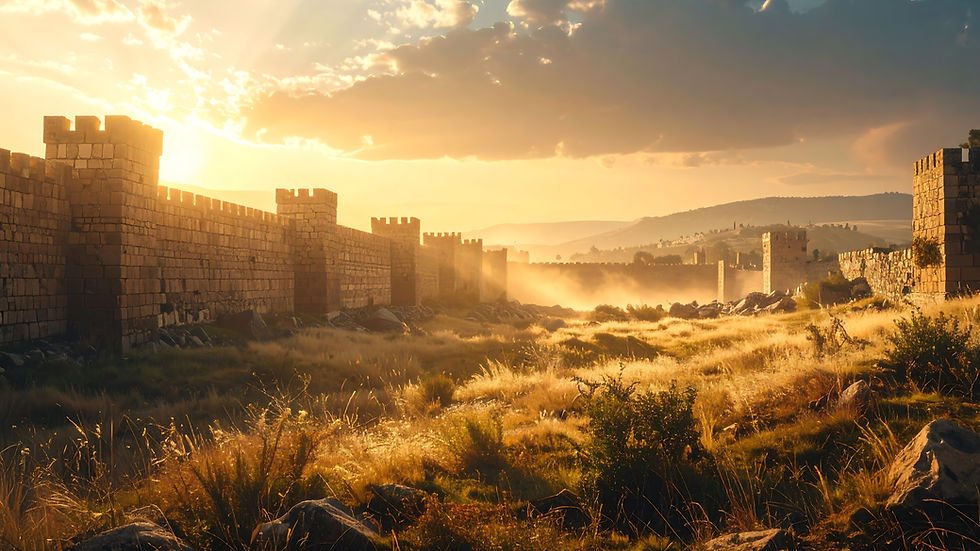
Walking on the roof of his palace, Nebuchadnezzar looked over Babylon and said, “Is not this great Babylon, that I have built... by the might of my power, and for the honour of my majesty?” It was all about him. What he had built. What he had achieved. What he deserved credit for.
It’s easy to look at Nebuchadnezzar and think his pride was extreme, but perhaps the warning is closer to home than we realise. Moses had warned Israel about the same danger in Deuteronomy 8. When they entered the promised land, had plenty to eat, lived in good houses and became prosperous, they were told to be careful that their hearts were not lifted up and that they did not forget God.
Prosperity can quietly change the way we think. “God has provided for me” can slowly become, “I’ve worked hard for this.” We live in a world where we can plan for almost everything. We have savings, superannuation, insurance, careers and technology designed to make life more secure. None of those things are wrong, but they can create the illusion that we are completely self-sufficient. Even recognition can feed that feeling. We achieve something, people notice, the likes and compliments come in, and there is a small temptation to enjoy the glory for ourselves.
Nebuchadnezzar had to learn the hard way that “the Most High rules in the kingdom of men”. His power was taken from him until he finally lifted his eyes away from himself and towards heaven. And when he did, he was restored. The contrast with Jesus is powerful.
Philippians 2 tells us that Christ willingly “took upon him the form of a servant”. His humility wasn’t forced upon him after a fall. He chose it. That leaves us with a simple question. When life is going well, where are our eyes?On what we have achieved, built and accumulated? Or on the God from whom every blessing has come? Humility begins by remembering that everything we have is ultimately His, and then choosing, as Christ did, to use what we’ve been given in the service of others.


Comments